Showing posts with label history. Show all posts

Friday, February 19, 2016

Irish Eyes Are Smiling in St. Augustine

Memories of last year's Celtic Music and Heritage Festival in my beloved St. Augustine make me yearn for a return visit. This year's festival takes place March 11-13 and celebrates Celtic culture in the nation's oldest city.

Celtic Festival - St. Augustine 2015 - 065
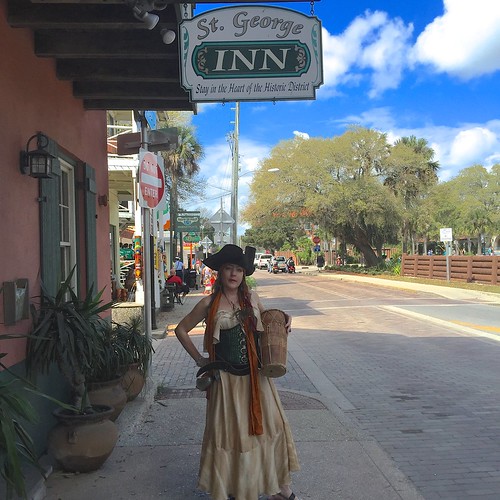
Ready to get my Celtic on with some pirate garb. Later, I got me a kilt.


ST. AUGUSTINE'S CELTIC ROOTS


Celtic culture is dear to my heart and it's in my blood; my ancestors hailed from Northern Spain, one of seven Celtic nations. The Spanish Celts share many traditions with Scottish and Irish Celts, the most common being music, costume and dance, as evidenced in the gaita (bagpipe), falda escosesa (kilt) and jota (jig).

St. Augustine's Spanish roots are intertwined with Celtic connections and some historical ties began early on: Florida's first Spanish Colonial Governor Don Pedro Menendez and his 800 colonists were from Northern Spain. In 1784, 460 Irish soldiers were stationed in St. Augustine with the Hibernia Regiment. Father Miguel O'Reilly arrived in St. Augustine in 1777 to minister to the colony's Menorcan residents. He later became the Hibernian Regiment's chaplain and vicar of the entire colony.

St. Augustine, so rich in history, comes alive with Celtic culture during the festival. I attended last year with my friend Michelle Marcos, a Miami-based historical romance novelist whose trilogy Highland Knaves is set in Scotland. Her beautifully written novels serve up sexy romance, to be sure, with even more to love -- historically accurate storylines draw the reader into page-turning adventures.

It was only natural to talk about about sexy Celts and history all weekend long!

BRINGING OUT YOUR INNER CELT


Throughout the weekend, we also enjoyed observing men in kilts ... oh pardon me, I meant men playing Highland games in kilts. There was still occasion to blush a little; the athletes mustered up quite a bit of strength and dexterity to impress the ladies, for sure, especially in the caber toss.

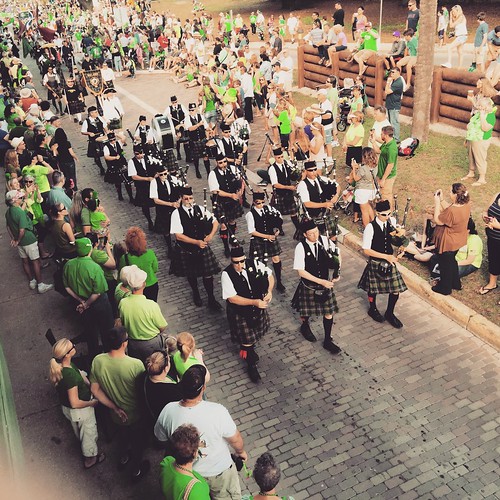
For musical pleasure, we heard many acts, but none so rousing for me as the bagpipes and drums of Albannach and the sound of bagpipes in the morning as I sipped coffee on the balcony of the St. George Inn facing St. Augustine's old city gates. We had the best view of the parade and the vibration from the instruments stirred the cool, crisp air that morning.

Celtic Festival - St. Augustine 2015 - 100
Bagpipes everywhere! 


Celtic Festival - St. Augustine 2015 - 057
The best view of the parade is from the balcony at The St. George Inn.


Celtic Festival - St. Augustine 2015 - 076
With the friendly musicians from Albannach.


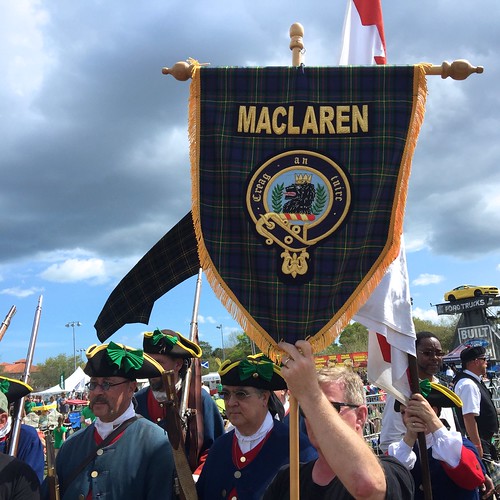
Many clans were present to represent their lineages proudly. They paraded with bagpipes and drums throughout the day.

I stepped out in my pirate garb with makeshift Celtic variations. If fashion is your thing, the festival's vendors offer beautiful merchandise.
Celtic Festival - St. Augustine 2015 - 096
Several clans were representing at the festival.


Celtic Festival - St. Augustine 2015 - 087
Because beer wenches.


I asked Michelle, who traveled to Scotland to research her novels, to join me on this trip because I knew she'd enjoy traveling back to another century in St. Augustine. That's my usual modus operandi for heading up north: "I'd like to spend some time in the 18th century this weekend, how about you?"

That's how beautifully St. Augustine captures its rich history and even more so during the spring time when the Celts invade the city. My eyes may not be exactly Irish, but the Spanish Celtic heart in me shines when I think about this memorable trip.

The St. Augustine Celtic Music and Heritage Festival takes place March 11-13, 2016 and features a whiskey tasting, Celtic performers, Highland games, Celtic clans, food, merchandise and children's entertainment. For more information, visit Celtic St. Augustine.

More photos on Flickr.


Disclosure: this historical travel experience was supported in part by Florida's Historic Coast, The St. George Inn and GM Southeast. All opinions my own.

Tuesday, September 04, 2012

The Miami Freedom Tower

Freedom Tower miami
The Freedom Tower in Miami, Florida.

Earlier this summer, I had the honor of receiving an assignment from The American Latino Heritage Fund to participate in a road trip celebrating America’s Hispanic roots.  Because of my caregiving situation, I was not actually able to travel, but my trusted fellow explorer, Tallahassee-based Bohemian Babushka, took to the road with the itinerary I had planned highlighting national parks and historic sites relevant to Florida’s Spanish history. I participated remotely and was able to report on the Freedom Tower in Miami.

The American Latino Heritage Fund is a branch of the National Park Foundation, which is the charity for the National Park Service. Six bloggers were chosen to travel across different sections of the country.

Since I had already done Trail of the Pirates, this road trip seemed like a natural follow-up, which is quite timely – in 2013, Florida will celebrate its 500th anniversary, marking Ponce de León’s sighting of the peninsula in 1513.

THE FREEDOM TOWER

Freedom Tower downtown miami historic landmark
A gentle lady among steely giants.

The Freedom Tower is listed in the National Register of Historic Places and is also a National Historic Landmark. The building today is overshadowed by modernity: gargantuan glass condos and the American Airlines arena flank its ornate facade.  But this building echoes a distant time in a far away land – built in 1925 to house the Miami News, its design was inspired by the Giralda Tower, which was part of a 13th century Muslim mosque that would later become the main cathedral in Sevilla, Spain.

Miami was no stranger to Spanish influence since Columbus’ first voyage to America.  In 1513, Ponce de León sailed into Biscayne Bay. Pedro Menéndez de Avilés, the founder of St. Augustine, set foot here in 1566, while on a voyage to find his shipwrecked son.

The Miami River was once the site of a Catholic mission located less than a mile from where the Freedom Tower stands today. In 1567, a Jesuit brother transported Tequesta Indians who lived by the Miami River to the Sevilla cathedral where they were baptized.

But fast forward to the 20th century: in the 1960s, the building became the Ellis Island of the South for many Cuban refugees fleeing the island’s Marxist regime.  Cuban immigrants flocked to the resettlement center for processing and support. Many Cubans lived just west of the Miami River in a neighborhood called Riverside -- a section of today’s Little Havana. The refugees would visit the tower to collect food, cash, clothing and other essentials.

Miami Dade College owns the tower today. Its spacious mezzanine serves as an art gallery and reception space.

The Freedom Tower is an icon of America’s Spanish heritage, not only for its design, but because it marks a significant moment in the country’s continual history of immigration.

And poised like a gentle lady among steely giants, she reminds us of the drive to explore and the desire for freedom. It is fitting that another icon of Latin American culture – Celia Cruz, the world-renowned salsa singer – held her public memorial service here for South Floridians.  Thousands passed through the tower’s majestic door that day in 2003 to honor the sassy songstress.

Freedom Tower miami
Yours truly, Dr. Paul George and Bohemian Babushka.

INTERVIEW WITH DR. PAUL GEORGE


THE FLORIDA LATINO HERITAGE ITINERARY

viva florida 500
Bohemian Babushka traveled all over Florida.  Below are points of interest, should you desire to repeat the same itinerary.

Florida's Spanish history is rich though and due to time constraints, we omitted the Treasure Coast, Biscayne Bay National Park and Dry Tortugas National Park, as well as other Gulf Coast sites.

No body of water surrounding the state was left untouched by Spanish influence and the Gulf Stream off the east coast aided navigation for the Spanish Main. Galleons, laden with treasure, shipwrecked the east coast in 1715 but the most famous wreck, the Atocha, is just south of Key West.  On the gulf coast, stories abound, including the voyages of explorers Hernando de Soto and Pánfilo de Nárvaez, who battled with Calusa Indians in the 15th and 16th centuries.

A lesser-known Spaniard, Hernando De Escalante de Fontaneda, shipwrecked on the gulf coast at the age of 13 and lived with native tribes for 17 years until Pedro Menéndez de Avilés rescued him around 1566. He eventually returned to Spain and wrote a memoir of his experiences in the New World.

Next year, Babushka and I plan on covering the Florida quincentenary with a richly detailed documentary about Florida’s Spanish heritage, starting out with the very first Christmas at Mission San Luis in Tallahassee.

Learn more about the quincentenary at Viva Florida.


LINKS TO HISTORIC SITES

Read a recap of the journey at Bohemian Babushka.

De Soto National Memorial

De Soto Winter Encampment

Museum of Florida

Mission San Luis

Castillo De San Marcos

Fort Matanzas

Ybor City Museum

Freedom Tower

ACKNOWLEDGEMENTS

The Florida segment of the American Latino Heritage Fund Road Trip was generously supported by VISIT FLORIDA, Verizon Wireless and GM Diversity/GM Southeast, as well as the following convention and visitors bureaus: Charlotte Harbor, Bradenton Area, Tampa Bay, Visit Tallahassee and Florida’s Historic Coast.

Special thanks to historian and professor Dr. Paul George for his time and to Alfonso Guerra for assisting in the Freedom Tower interview. R. Gabrielle Reed loaned beautiful period costumes and the Florida Humanities Council, as well as actor Chaz Mena, contributed to research.  Manny Ruiz of Hispanicize was one of the project organizers.

Wednesday, July 28, 2010

Julia Tuttle Unveiled!

A follow-up of an earlier post in the Babes with Brains column.

julia tuttle statue miami bayfront parkJulia Tuttle can finally stand proud in the shadow of city she founded on July 28, 1896.

She's finally here in all her 10 foot bronze glory! The Julia Tuttle statue unveiling took place this very hot and sweaty morning behind the playground at Bayfront Park. Nearly 200 people crammed into an air-conditioned tent where movers and shakers -- from Mayor Tomas Regalado to historian Arva Moore Parks -- spoke on the subject of Miami's founder.

The statue is beautiful, thanks to the handiwork of Daub and Firmin studios. In a graceful gesture, Tuttle's palm extends upward holding the famous orange blossoms that convinced Henry Flagler to bring his railroad to the shores of the Miami river. That offering summarizes the story: "I gave orange blossoms and a city was born."

But Tuttle's skirt tells more. Bas relief displays scenes from Miami's frontier down days. The style is deliberate: Arva Moore Parks encouraged everyone to visit the statue and "touch Miami."

Tuttle wants you to touch her; it's supposed to be a tactile experience. She doesn't create distance. Those scenes may be from the past, but history is here and now. It's all around you. You're standing on it. You're looking at it. In a city that tends to ignore history, Tuttle's statue is a fixed reminder that history is always there, if you're willing to look for it, touch it and feel it in your heart.

There's something feminine and maternal about the work, yet also something strong and powerful. Her head is slightly tilted, looking to the side, so she doesn't feel like a statue, but rather an organic creature, who might have ironed her blouse just before posing. Her face is serene as if she was just about to ask you to join her for a cup of tea, yet she stands determined.

I simply love the immediacy of this statue. Yes, she's imposing, but she's also very real.

Most moving are the visionary words carved into her skirt, written just before her death:
"It may seem strange, but it is the dream of my life to see this wilderness turned into a prosperous country ... as surely as the sun rises and sets all of this will come true."
At the age of 42, Tuttle helped build this city with pure tenacity and grit. Sadly, she died at age 49 never to see her dream come true, so think of what it means to see her face framed by towering high-rises in the photo above.

R and B songstress Betty Wright belted out "I Am Woman" just after the statue was unveiled. Enjoy!


More pictures of the statue on Flickr.

Friday, July 23, 2010

Babes with Brains: Miami Mama Julia Tuttle Finally Gets Her Due

Babes with Brains takes a look at South Florida's entrepreneurial women. This is the first of a series.


julia tuttle miami statue unveiling

Move over South Beach bimbos! The Kardashian sisters weren't the first to start business here. Hey, you gotta look back ... WAY back to the late 19th century when tough cookie Julia Tuttle pulled a Lebron James, packed her shit from Cleveland but instead of playing hoops, she built a homestead sans husband all on her own on the banks of the Miami river. Can you imagine dealing with mosquitoes and humidity in those heavy, frumpy frocks? This woman really had balls!

Julia Tuttle had plans for all the property she owned, as in big development plans, though it would be almost a century before high-rises would sprout out of the downtown limestone. Besides, she probably wanted more neighbors than the Brickells, who were trading with Seminoles on the south banks of the river.

With a gift of orange blossoms, she convinced railroad magnate Henry Flagler to bring the tracks down to what was then called Fort Dallas and soon enough, a city was born. Julia Tuttle is the only babe to have ever founded a major US city. Come on Miamians! And you thought Lebron James was the best Ohio export? Here's something you can really be proud of.

Thanks to hard work by some folks as dogged and determined as Tuttle herself, this pioneer in a pinafore finally gets more than a namesake causeway to Miami Beach. On Thursday, July 28 at 9:30 a statue in her honor will be unveiled at Bayfront Park.
The statue is a 10-foot bronze, and the skirt depicts in astonishing detail the scenes typical of Miami around the time of its incorporation. In her right hand, Julia is holding the famous orange blossoms that she sent to Henry Flagler to convince him to extend his railroad to Miami.

An Oversight Committee of experts and members of the two women’s commissions [The Miami-Dade County Commission for Women and the City of Miami Commission on the Status of Women] supervised the entire process and raised over $200,000 for the statue. Arva Moore Parks, noted Miami historian and member of the Oversight Committee, provided the historical research for the accuracy of the scenes depicted on the skirt. The statue was created by Daub & Firmin Studios, a noted sculpture firm with extensive experience in monumental sculpture and the creation of art for public spaces.
The statue has been a long time coming. Fundraising started in 1996, the year of the Miami Centennial. It's fitting that July 28 is also the 114th anniversary of the City of Miami's incorporation. Julia will finally get to look over the city she helped build -- if she can see through all the condos.

To attend, please RSVP to the Miami Downtown Development Authority at (305) 579-6675 or email info [at] miamidda [dot] com.